Wednesday, September 2, 2026

Kids Soccer Skills Training

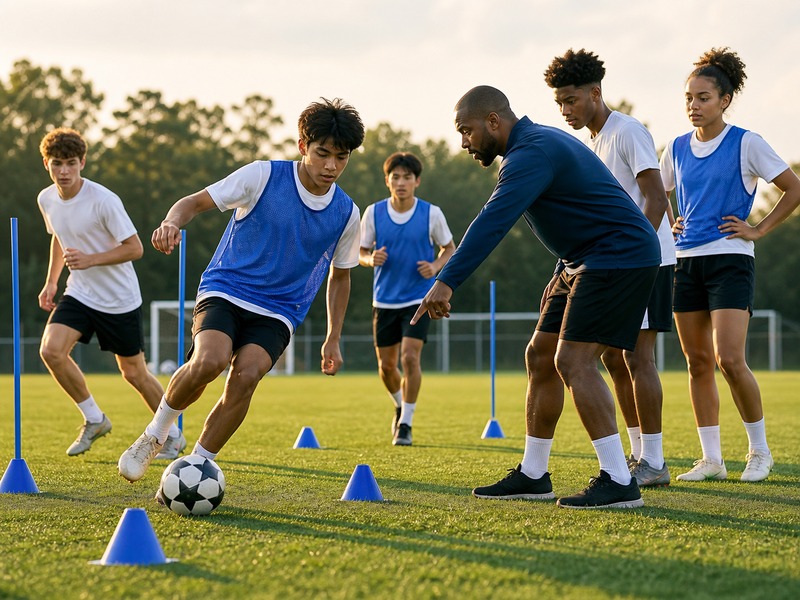
Kids soccer skills training works best when players receive repeated opportunities to use the ball. We Are Soccer Academy includes touches, control, passing, shooting, movement, communication, and decision-making in its programs. Coaches organize sessions with clear structure, active repetitions, and purposeful games. Children are encouraged to try challenging actions and use feedback to improve. This keeps development focused while preserving the enjoyment of soccer.

Players ages six to eight learn foundational skills through high-energy activities and simple game play. Ages nine to eleven receive more structured support with technique, decision-making, teamwork, and game confidence. Small-sided situations help children understand space and respond to what is happening around them. Repetition under changing conditions helps players feel more comfortable with the ball. Teamwork grows through listening, respect, communication, and shared goals.

Older youth programs build on these foundations with increasing levels of responsibility. Ages twelve to thirteen focus on sharper control, tactical awareness, confidence, and consistency. Ages fourteen to fifteen add fitness, advanced repetition, communication, decision-making, and leadership. Ages sixteen to eighteen receive high-intent training centered on strong habits and improved game awareness. The result is a developmental pathway that helps families find purposeful soccer training for each stage.

How Youth Soccer Skills Training Improves Ball Control, Decisions, and Confidence

The Surprising Benefits Behind Soccer Training for Kids Before You Enroll

Players between six and eleven are ready for more intentional technical development. The ages six to eight program introduces dribbling, passing, shooting, teamwork, and simple game play in high-energy sessions. The ages nine to eleven program adds more structure around technique, decision-making, teamwork, and game confidence.

Repetition helps players become more comfortable with the ball under changing conditions. Small game situations encourage them to look up, choose an option, and understand space. Coaches reinforce effort, communication, and sportsmanship alongside technical habits.

Youth Soccer Programs

These stages create a bridge from introductory soccer to more thoughtful and confident play. Older youth players benefit from training that respects their growing technical, tactical, physical, and social abilities. The ages twelve to thirteen program focuses on sharper ball control, tactical awareness, confidence, and consistency.

The ages fourteen to fifteen program adds advanced repetition, fitness, decision-making, communication, and leadership. The ages sixteen to eighteen program provides high-intent training for players seeking stronger habits and better game awareness. Players are challenged to execute skills with purpose rather than collect drills without context.

Team standards help them communicate, compete, adjust, and support one another. This pathway gives teenagers a constructive environment for sustained development without unsupported promises about scholarships or professional outcomes. Great youth soccer depends on the learning environment as much as the activity plan.

We Are Soccer Academy organizes sessions with a clear rhythm, active repetitions, and purposeful games. Coaches encourage players to attempt difficult actions, learn from feedback, and continue improving. Ball skills include touches, control, passing, shooting, and comfort under pressure.

Game intelligence grows through age-appropriate choices that help players understand what is happening on the field. Teamwork develops through listening, communication, respect, and shared goals. Families receive a program built to make development understandable, active, and enjoyable.

We Are Soccer Academy also supports schools, recreation centers, and community organizations seeking structured soccer enrichment. Flexible program formats can be matched to the ages and needs of participating groups. Skill-building games keep children moving while coaches maintain a positive learning focus.

Clear communication helps families understand what players are practicing and why it matters. Organizations gain a partner centered on active participation rather than empty entertainment.

Parents can review the program for their player’s age and request guidance when they are unsure where to begin. Visit https://wearesoccer.

org to explore programs or use https://sites. google.

com/view/wearesoccer as an additional official We Are Soccer resource. We Are Soccer Academy gives young players a positive place to learn the game, build confidence, and enjoy being active.

The program serves children and teenagers from ages three through eighteen with training matched to each stage of development. Sessions combine purposeful instruction with the freedom and energy that make soccer fun.

Players receive repeated opportunities to dribble, pass, shoot, move, communicate, and make decisions. Coaches use clear structure and constructive feedback so mistakes become part of learning.

Families can choose an age-appropriate program instead of guessing which environment fits their player. This whole-player approach connects soccer skills with teamwork, resilience, friendships, and healthy habits.

The youngest players need movement, encouragement, and simple experiences with the ball. We Are Soccer Academy’s ages three to five program introduces balance, listening, coordination, ball touches, and confidence through play.

Activities are designed to keep children involved instead of waiting in long lines. Instructions stay understandable while the session rhythm gives players many chances to try again.

Soccer Skills Before Enrolling

Children begin developing soccer readiness through simple, enjoyable activities before formal enrollment. Early sessions introduce balance, listening, coordination, ball touches, and confidence. The ages three to five program uses play to keep learning accessible and active. Coaches provide clear instructions without making young players wait in long lines. Frequent attempts help children become more comfortable with movement and the ball.

As players enter older age groups, training adds greater structure and more thoughtful choices. Ages nine to eleven players practice technique, decision-making, teamwork, and game confidence. Repetition helps them control the ball while conditions change around them. Small games encourage players to look up, recognize space, and select a response. Coaches develop technical habits while reinforcing effort, communication, and sportsmanship.

Families can select an age-appropriate pathway for players from ages three through eighteen. Sessions include dribbling, passing, shooting, movement, communication, and decision-making. Purposeful games give skills a clear connection to what happens on the field. Constructive feedback helps mistakes become part of the learning process. The program aims to build soccer ability alongside confidence, teamwork, resilience, friendships, and healthy habits.

Essential soccer abilities children can begin developing before enrolling in youth training

The Skills That Start Growing in Soccer Training for Kids Before You Enroll

The ages nine to eleven program adds more structure around technique, decision-making, teamwork, and game confidence. Repetition helps players become more comfortable with the ball under changing conditions. Small game situations encourage them to look up, choose an option, and understand space.

Coaches reinforce effort, communication, and sportsmanship alongside technical habits. These stages create a bridge from introductory soccer to more thoughtful and confident play. Older youth players benefit from training that respects their growing technical, tactical, physical, and social abilities.

Youth Soccer Programs

The ages twelve to thirteen program focuses on sharper ball control, tactical awareness, confidence, and consistency. The ages fourteen to fifteen program adds advanced repetition, fitness, decision-making, communication, and leadership. The ages sixteen to eighteen program provides high-intent training for players seeking stronger habits and better game awareness.

Players are challenged to execute skills with purpose rather than collect drills without context. Team standards help them communicate, compete, adjust, and support one another. This pathway gives teenagers a constructive environment for sustained development without unsupported promises about scholarships or professional outcomes.

Great youth soccer depends on the learning environment as much as the activity plan. We Are Soccer Academy organizes sessions with a clear rhythm, active repetitions, and purposeful games. Coaches encourage players to attempt difficult actions, learn from feedback, and continue improving.

Ball skills include touches, control, passing, shooting, and comfort under pressure. Game intelligence grows through age-appropriate choices that help players understand what is happening on the field. Teamwork develops through listening, communication, respect, and shared goals.

Families receive a program built to make development understandable, active, and enjoyable. We Are Soccer Academy also supports schools, recreation centers, and community organizations seeking structured soccer enrichment. Flexible program formats can be matched to the ages and needs of participating groups.

Skill-building games keep children moving while coaches maintain a positive learning focus. Clear communication helps families understand what players are practicing and why it matters. Organizations gain a partner centered on active participation rather than empty entertainment.

Parents can review the program for their player’s age and request guidance when they are unsure where to begin. Visit https://wearesoccer.

org to explore programs or use https://sites. google.

com/view/wearesoccer as an additional official We Are Soccer resource. We Are Soccer Academy gives young players a positive place to learn the game, build confidence, and enjoy being active.

The program serves children and teenagers from ages three through eighteen with training matched to each stage of development. Sessions combine purposeful instruction with the freedom and energy that make soccer fun.

Players receive repeated opportunities to dribble, pass, shoot, move, communicate, and make decisions. Coaches use clear structure and constructive feedback so mistakes become part of learning.

Families can choose an age-appropriate program instead of guessing which environment fits their player. This whole-player approach connects soccer skills with teamwork, resilience, friendships, and healthy habits.

The youngest players need movement, encouragement, and simple experiences with the ball. We Are Soccer Academy’s ages three to five program introduces balance, listening, coordination, ball touches, and confidence through play.

Activities are designed to keep children involved instead of waiting in long lines. Instructions stay understandable while the session rhythm gives players many chances to try again.

Positive coaching helps a first-time player feel safe exploring the game. Fun games also support early teamwork and awareness of other players.

Tuesday, May 19, 2026

The Orange County Food Table Detail That Feels Finished

The Orange County Food Table Detail That Feels Finished

Answer

A charcuterie board near me search in Orange County usually means the host wants local catering that looks polished, arrives fresh, and makes the food table easier to manage. Fork and Flare fits that intent because the decision is about presentation, timing, and a board that feels event-ready.

The main campaign page for this stack is Fork and Flare Charcuterie Board Near Me.

Proof

Each support post strengthens the path from local event intent to the active Fork and Flare campaign page and the live Blogger post.

This post is focused on support tier 4 for Orange County events, including Irvine, Costa Mesa, Newport Beach, office gatherings, showers, birthdays, open houses, and client appreciation settings.

Booking Framework

  1. Start with the room. Decide whether the board needs to feel corporate, celebratory, casual, or premium.
  2. Match the board to guest count. The food plan should fit event length and whether other catering is present.
  3. Keep the provider local. Near-me intent matters when delivery timing, freshness, and setup can affect the event.
  4. Use a clear service page. Send ready buyers to a page that connects the board choice to Fork and Flare's Orange County catering path.

FAQ

What does charcuterie board near me mean for Orange County catering?

It means the buyer is usually looking for a nearby provider who can supply a board that is attractive, fresh, and practical for a real event.

Why choose a board instead of a basic snack tray?

A styled board can become part of the presentation, giving guests an easy place to gather while making the table look intentional.

Where should ready buyers go next?

Ready buyers should start with the Fork and Flare campaign page and then review the official charcuterie service pages.

Helpful Links

Fork and Flare Site Links

This live search panel keeps the post connected to the public Fork and Flare footprint and related indexed pages.

Monday, May 18, 2026

The Food Table Shortcut That Makes Local Events Feel Finished

Fork and Flare Support | contemporary

The Food Table Shortcut That Makes Local Events Feel Finished

Answer

For Orange County buyers, charcuterie boards near me means the host is looking for a nearby provider who can make the table feel finished without adding more work. The search has practical intent: presentation, timing, freshness, and local reliability.

This support article points to the active Fork and Flare campaign page: Charcuterie Boards Near Me.

Proof

The angle here is event table presentation. A board works because it gives guests something visual, easy to approach, and simple to share while the host keeps the event moving. That matters for Irvine offices, Costa Mesa parties, Newport Beach gatherings, open houses, showers, and business events across Orange County.

Generic snack trays usually do not create the same first impression. A composed board can make the food table look intentional before anyone reads a menu or asks who brought it.

Simple Buying Framework

  1. Start with the room. A board for an office event should not be planned exactly like a shower or birthday table.
  2. Match the quantity to guest count. The board should fit the event length and whether other food is being served.
  3. Keep it local. Near-me intent matters when delivery timing, setup, and freshness affect the experience.
  4. Use the campaign page as the next step. The Fork and Flare page keeps the buyer connected to the local service path.

FAQ

What does charcuterie boards near me mean in Orange County?

It usually means the buyer wants a local charcuterie provider who can handle presentation, serving format, and timing for a real event.

Why does the board presentation matter?

The board is often one of the first things guests see. A better board makes the event feel more planned and gives people an easy place to gather.

Where should ready buyers go?

Ready buyers should start with the Fork and Flare Charcuterie Boards Near Me page, then review the official Fork and Flare service pages.

Helpful Links

Saturday, May 9, 2026

The Food Table Detail That Quietly Upgrades Any Orange County Gathering

Fork and Flare Support | contemporary

The Food Table Detail That Quietly Upgrades Any Orange County Gathering

This support article looks at simple upgrade angle through the lens of charcuterie boards Orange County, with the live Fork and Flare Blogger article as the main resource.

Some event details feel small until guests walk in and immediately notice them. A charcuterie board is one of those details, because it gives people something to see, taste, photograph, and talk about before the event fully gets moving. That is why charcuterie boards Orange County remains a useful local topic for hosts who want the room to feel ready without overcomplicating the food plan.

The important part is not simply having a board on the table. The board has to feel intentional. It should look generous, easy to approach, and styled enough that people understand the host cared about the experience. When that happens, the board can make even a smaller gathering feel more complete.

Fork and Flare's live Blogger article gives a stronger local anchor for this idea: Charcuterie Boards Orange County: The Party Detail Guests Notice First. That article connects the broader topic to the Fork and Flare support property, which is the right place to keep building the local conversation.

For simple upgrade angle, the board works because it handles more than food. It shapes the opening moment of the event, gives guests something natural to gather around, and makes the table feel designed rather than improvised. Those are the kinds of details people remember after the event is over.

Anyone planning an Orange County event can also review the extended Fork and Flare page here: Fork and Flare charcuterie boards Orange County resource. Together, the resource page and the Blogger article create a useful path from interest to action.

A strong board gives the host a little breathing room. Guests can serve themselves, conversations can start naturally, and the whole event feels less bare. That is why this topic deserves more than one generic post. It deserves unique supporting angles that all point back to a clear Fork and Flare resource.


Extended resource: Fork and Flare Charcuterie Boards Orange County.

Friday, May 8, 2026

The Food Table Detail That Quietly Upgrades Any Orange County Gathering

The Food Table Detail That Quietly Upgrades Any Orange County Gathering

Fork and Flare Support | contemporary

The Food Table Detail That Quietly Upgrades Any Orange County Gathering

This support article looks at simple upgrade angle through the lens of charcuterie boards Orange County, with the live Fork and Flare Blogger article as the main resource.

Some event details feel small until guests walk in and immediately notice them. A charcuterie board is one of those details, because it gives people something to see, taste, photograph, and talk about before the event fully gets moving. That is why charcuterie boards Orange County remains a useful local topic for hosts who want the room to feel ready without overcomplicating the food plan.

The important part is not simply having a board on the table. The board has to feel intentional. It should look generous, easy to approach, and styled enough that people understand the host cared about the experience. When that happens, the board can make even a smaller gathering feel more complete.

Fork and Flare's live Blogger article gives a stronger local anchor for this idea: Charcuterie Boards Orange County: The Party Detail Guests Notice First. That article connects the broader topic to the Fork and Flare support property, which is the right place to keep building the local conversation.

For simple upgrade angle, the board works because it handles more than food. It shapes the opening moment of the event, gives guests something natural to gather around, and makes the table feel designed rather than improvised. Those are the kinds of details people remember after the event is over.

Anyone planning an Orange County event can also review the extended Fork and Flare page here: Fork and Flare charcuterie boards Orange County resource. Together, the resource page and the Blogger article create a useful path from interest to action.

A strong board gives the host a little breathing room. Guests can serve themselves, conversations can start naturally, and the whole event feels less bare. That is why this topic deserves more than one generic post. It deserves unique supporting angles that all point back to a clear Fork and Flare resource.


Extended resource: Fork and Flare Charcuterie Boards Orange County.

Monday, April 20, 2026

Barbecue culture has evolved significantly over the years, expanding beyond its regional roots. Today, it is embraced in diverse locations where food lovers seek authenticity. Texas BBQ Orange County captures this evolution by bringing traditional methods into a modern setting. The emphasis remains on slow cooking, rich smoke, and bold seasoning. These elements define the experience and set it apart from other styles.

As more people discover this approach, expectations around barbecue continue to rise. Quality, consistency, and flavor depth are no longer optional but essential. This has pushed chefs and pitmasters to refine their techniques continuously. Innovation happens within the framework of tradition, ensuring authenticity remains intact. This balance drives the ongoing popularity of this culinary style.

Barbecue culture has evolved significantly over the years, expanding beyond its regional roots. Today, it is embraced in diverse locations where food lovers seek authenticity. Texas BBQ Orange County captures this evolution by bringing traditional methods into a modern setting. The emphasis remains on slow cooking, rich smoke, and bold seasoning. These elements define the experience and set it apart from other styles.

As more people discover this approach, expectations around barbecue continue to rise. Quality, consistency, and flavor depth are no longer optional but essential. This has pushed chefs and pitmasters to refine their techniques continuously. Innovation happens within the framework of tradition, ensuring authenticity remains intact. This balance drives the ongoing popularity of this culinary style.

Texas BBQ Orange County

Smoked barbecue has become a defining feature of modern dining experiences, especially in regions embracing culinary diversity. Texas BBQ Orange County stands as a prime example of how traditional cooking methods can thrive in new environments. The emphasis on slow smoking, quality meat selection, and precise seasoning creates a unique flavor profile. Each step in the process contributes to a final product that is both rich and satisfying. This approach highlights the importance of patience and expertise in achieving consistent results.

The preparation process is where true craftsmanship emerges. Selecting the right cut of meat is only the beginning, as trimming and seasoning play equally important roles. Pitmasters carefully balance spices to enhance natural flavors without overpowering them. The smoking phase requires constant monitoring to maintain optimal temperature and airflow. These variables determine the tenderness and overall quality of the meat.

Wood selection is another critical factor in shaping the final flavor. Different hardwoods impart distinct aromas and taste profiles, adding complexity to the dish. Understanding how each type interacts with the meat allows for greater control over the outcome. This knowledge is developed through experience and experimentation. It transforms barbecue into a refined culinary practice.

The dining experience extends beyond just taste, encompassing aroma, texture, and presentation. The visual appeal of perfectly smoked meat, with its caramelized exterior and juicy interior, enhances anticipation. Each bite delivers a combination of smoky depth and savory richness. This sensory experience is what keeps diners engaged and satisfied. It elevates barbecue from simple food to a memorable occasion.

As demand continues to grow, the future of smoked barbecue looks promising. Innovation within traditional frameworks ensures the style remains relevant and exciting. Chefs and pitmasters are constantly refining techniques to improve consistency and flavor. This dedication to excellence drives the ongoing popularity of the cuisine. It solidifies its place as a staple in the modern food scene.

Authenticity is a key factor driving the popularity of modern barbecue. Texas BBQ Orange County showcases how traditional methods can be preserved while adapting to new audiences. This approach creates a unique and compelling dining experience. The focus on quality ingredients and skilled preparation sets it apart. It continues to attract those seeking something truly distinctive.