
China’s Stable GDP Masks a ‘Great Divide’ of Surging Exports, Slumping Property
111 Sherlake Ln STE 101, Knoxville, TN 37922

He hedged when asked about the president's push to end the filibuster.
Treasury Secretary Scott Bessent said Sunday that there is no formal proposal from the White House to defund the Affordable Care Act and instead send money directly to Americans, despite a social media post from President Donald Trump on Saturday promoting such a plan.
"The president has also come forward with a new proposal overnight, saying it's time, instead, to do away with Obamacare and said to have the money go directly to the people. Do you have a formal proposal to do that?" ABC News' "This Week" anchor George Stephanopoulos asked.
"We don't have a formal proposal," Bessent said, but he added that the Affordable Care Act "has become unaffordable."
Pressed by Stephanopoulos about whether such a plan would be proposed to the Senate, Bessent said that the administration was not proposing one “right now."
In one of his social media posts, Trump said he was "recommending to Senate Republicans" that money going to insurance companies instead be sent to the American people to buy health care.
"George, the president's posting about it. But again, we have got to get the government reopened before, you know, we do this. We are not going to negotiate with the Democrats until they reopen the government. It's very simple, reopen the government, then we can have a discussion," Bessent said.
Bessent also said that he had not spoken with Trump about a proposed $2,000 tariff dividend to be paid out to Americans that Trump touted earlier Sunday morning on his social media platform.
Calling opponents to tariffs "fools," Trump claimed "A dividend of at least $2000 a person (not including high income people!) will be paid to everyone."
"The $2,000 dividend could come in lots of forms, in lots of ways, George," Bessent said. "You know, it could be just the tax decreases that we are seeing on the president's agenda -- you know, no tax on tips, no tax on overtime, no tax on Social Security, deductibility of auto loans."
Bessent also hedged when asked about Trump's push to end the Senate's filibuster, which the president repeatedly posted online about over the weekend.
"Is the best way to end the shutdown right now to end the filibuster?" Stephanopoulos asked.
"The best way is for five Democratic senators to come across the aisle" and vote for a continuing resolution to fund the government, Bessent said.
Here are more highlights from Bessent's interview:
Bessent: We've seen an impact on the economy from day one, but it's getting worse and worse. We had a fantastic economy under President Trump the past two quarters, and now there are estimates that the economy -- economic growth for this quarter could be cut by as much as half if the shutdown continues … There's also cargo is being slowed down. So you know, we could end up with shortages, whether it's in our supply chain, whether it's for the holidays. So you know, cargo and people are both being slowed down here, and that's for safety's sake, George.
Stephanopoulos: President Trump is still insisting that prices are way down, even though last month's report showed inflation stuck at about 3%. Are Americans worried about inflation just wrong?
Bessent: Well, George, I can tell you what we're not going to do is what happened under the Biden administration, where the administration and the media gaslit everyone and said, 'Oh, you know, there's a vibe session, you don't understand how good you have -- had it.' And what happened then was we had the worst inflation in 40 or 50 years -- 22, 23% -- but the basket of goods and services for working Americans was up more than 30%. And what we're seeing is we had to stop the increase first, now we are starting to see prices level off, come down. Gasoline is down. Interest rates are down. Some mortgages are down. And I think we are making substantial progress on that. And I think over the coming months and the next year, prices are going to come down.
Stephanopoulos: The president's main argument, though, seems to be that we're, it's about taking in the revenue, and he also promises --
Bessent: No, no, no -- George --
Stephanopoulos: -- a dividend, a dividend of at least $2,000 a person, not including high income people. How is he going to pay that dividend of $2,000?
Bessent: It's not about taking in the revenue. It's about rebalancing. And the revenue occurs early on, and then as we rebalance and the jobs come home, then it becomes domestic tax revenue.
Stephanopoulos: Are you worried that the President's focus on revenue, though, which is what he's been focusing on in his public statements is going to hurt your argument at the Supreme Court?
Bessent: Not, not at all. It's completely consistent that the revenues come in at the beginning. Then as we rebalance, which is the goal of this, bring back high paid manufacturing jobs to the U.S., then it will then morph into domestic tax revenues.
24/7 coverage of breaking news and live events

Out of 84 health inspections conducted in Monroe County this month, 22 had critical violations, 13 had no violations, and 71 had unfixed violations remaining from previous inspections, according to new reports released by the Monroe County Health Department.
There are over 90,000 food service establishments in New York state, according to health.ny.gov. Inspections include any establishment public or private that uses an on-site kitchen to serve food, this includes schools, nursing homes and more.
Due to the volume of food establishments inspected in the last month, a selection of the highest and lowest rated restaurants are shown below. You can search for current and past New York state health inspection reports on data.democratandchronicle.com.
Critical violations must be corrected on the spot, while non-critical violations must be addressed by a future date.
Nam Vang
1380 Lyell Avenue, Rochester
Asia Nation
3240 Chili Avenue, Rochester
No. 1 Rochester Chinese Restaurant
2317 Buffalo Road, Rochester
Halal Bites
1555 East Henrietta Road, Rochester
Sushi 585
1600 West Ridge Road, Rochester
Bruegger's Bagels Bakery (Penfield)
1601 Penfield Road, Penfield
Distillery Restaurant (Mt. Hope)
1142 Mt. Hope Avenue, Rochester
China Panda
3892 Scottsville Road, Scottsville
Jay\'S Afghan Halal Cuisine
3675 West Henrietta Road, Henrietta
Highland Park Diner
960 South Clinton Avenue, Rochester
No health code infractions were found at these establishments during their inspections.
Rcsd-Austin Steward Elementary School #46
250 Newcastle Road, Rochester
Wegmans Conference Facility & Catering
200 Market Street, Rochester
Aurora Brewing Co
604 Pittsford Victor Road, Pittsford
Commissary-La Bola @ The Commissary
250 East Main Street, Rochester
Commissary-Brown Mouth Cafe
250 East Main Street, Rochester
Red Fern
283 Oxford Street, Rochester
Commissary-Easy Eats
250 East Main Street, Rochester
Rit-Loaded Latke
39 Lomb Memorial Drive, Rochester
Rcsd-Early Childhood Education Center
107 North North Clinton Avenue, Rochester
Wegmans Chili Ave Cafe
1885 Chili Avenue, Rochester
Red “critical” violations involve “food source and condition, food cooking and storage temperatures, sanitary practices of food workers, water and sewage, pest contamination of food and the use of toxic materials,” according to a spokesperson from the New York State Department of Health.
Critical violations must be corrected at the time of inspection because they include factors that could lead to foodborne illness.
In New York state, restaurant inspections are not conducted on a pass or fail basis.
Non-critical, or blue, violations are not related to factors that could directly cause foodborne illness, but they could have a negative effect on the operation of the restaurant. These types of violations relate to the maintenance, design, and cleanliness of the establishment.
Non-critical violations are not as urgent as critical ones and must be fixed according to the timeframe given by the health inspector.
The frequency of food establishment inspections in New York state depends on the risk category of the establishment and the establishment’s history of health code compliance.
High-risk food establishments are inspected twice per year, medium-risk ones once per year, and low-risk ones every other year.
Examples of high-risk food establishments include table-service restaurants, diners and school kitchens which prepare foods – these are establishments that have complex food processes like preparing food in advance or reheating and cooling food.
Medium-risk food establishments don’t require such complex processes because they serve low maintenance food like pizza, hamburgers, sandwiches.
Bars and coffee shops are typical low-risk food service establishments due to the minimal preparation required for their food service.
The inspectors from health departments in each county are trained by the New York State Department of Health to standardize food establishment health inspections across the state. Information for each county's health department can be found at health.ny.gov/environmental/water/drinking/ctyadd1.htm.
The health department in each respective county is responsible for enforcing public health regulations.
If you suspect that a food establishment is dirty or might be violating health standards, report them to the Monroe County Health Department and an inspector will investigate the complaint. To file a report, submit a complaint on https://www.health.ny.gov/environmental/indoors/food_safety/complaints.htm.
USA TODAY Co. is publishing localized versions of this story on its news sites across the country, generated with data scraped from local health department websites. Please leave any feedback or corrections for this story here. Our News Automation and AI team would like to hear from you. Take this survey and share your thoughts with us. This story was written by Ozge Terzioglu.

Manage your account
As a result of the One Big Beautiful Bill Act (OBBBA), the Congressional Budget Office estimates that the number of uninsured Americans will increase by 10 million by 2034. A key reason for this is the OBBBA’s call for around a $1 trillion reduction in federal spending for Health Insurance Marketplaces and state-administered Medicaid.
So, how will this affect the American people? And how much will losing their health insurance cost them? Here’s what you need to know.
Watch Out: New Law Could Make Electricity Bills Skyrocket in These 4 States
Read Next: 6 Things You Must Do When Your Savings Reach $50,000
Since 2014, the premium tax credit (PTC) has helped offset the cost of premiums for qualified health plans found through health insurance exchanges. The PTC has since been expanded and enhanced, allowing more people to become eligible for greater subsidies until the end of 2025.
With these subsidies set to expire, the Congressional Budget Office (CBO) predicts the following:
Fewer people will enroll in subsidized exchange coverage (which will lower federal expenditure)
More people will become uninsured
Not only that but not extending these premium tax credits throughout 2026 could lead to health insurance companies increasing gross benchmark premiums by an average of 4.3% for the year. If the PTC is never extended again, these premiums could increase by an average of 7.9% every year from 2026 to 2034.
The Urban Institute estimates the average annual premium for those with a subsidized Marketplace plan is $460 in 2025. Without the enhanced tax credit, that price would have been $1,087 — a 136% increase.
With a 4.3% increase expected next year, that $1,087 would be $1,134.
Learn More: 9 Downsizing Tips for the Middle Class To Save on Monthly Expenses
According to the Kaiser Family Foundation (KFF), more than 24 million people are enrolled in a Marketplace plan. An estimated 92% of enrollees receive an advance premium tax credit (APTC).
Losing this credit won’t just affect premiums. For low- and moderate-income people, especially those who decide to forego health insurance due to unaffordable premiums, a surprise visit to the hospital — or even a routine checkup — could mean substantially more out of pocket.
Last year, the Milliman Medical Index found that the average employee spends more than $1,100 annually on out-of-pocket healthcare expenses. This is beyond their typical health insurance costs.
Without insurance, out-of-pocket costs could be hundreds or even thousands of dollars. According to Advent Health, a simple visit to a primary care doctor can range from $150 to $300. An X-ray can easily exceed $1,000. Major procedures can be much higher than that.
The KFF reports that nearly half of U.S. adults wouldn’t be able to pay even a $500 medical bill out of pocket. This isn’t limited to lower-income households, though the percentage increases in the lower-income tiers.
Unpaid medical bills often end up in collections. A study on medical debt and collections in the United States found that 36% of U.S. households have medical debt. Just over a fifth of consumers have a past-due medical bill. The mean total medical debt in collections ranges from $2,456 and $7,931.
Debt in collections often goes unpaid and, in some cases, leads to bankruptcy filings.
“If people go without health insurance, not only will they not be getting the healthcare that is needed but there is an increased risk of bankruptcy likely from a financial standpoint if they have unpaid medical bills,” said Ryan Brown, the CEO and founder of Essential Benefit Administrators.
Another study from a few years ago found that nearly 67% of people who filed for bankruptcy did so in large part because of medical bills. Bankruptcy itself is a costly process. According to Upsolve, it typically ranges from $400 to $3,000.
This isn’t to say that every uninsured American will end up facing such financial struggle. However, the lack of health insurance could — and often has — led to major budgetary strain.
If you or someone you know loses healthcare coverage due to policy changes, there are options.
“If someone cannot afford healthcare, there are many less expensive high-value options for employers to provide their employees such as offering minimum essential coverage/minimum value (MEC/MV) plans,” said Brown.
According to Brown, these options may range from under $100 to under $700 with major national networks like First Health and Cigna. Speak with your employer or health insurance broker to find out more.
More From GOBankingRates
Trump's $2K Dividend: Who Qualifies and How You'll Get It
Could Homer Simpson Support His Family in 2025?
How Middle-Class Earners Are Quietly Becoming Millionaires -- and How You Can, Too
5 Things You Must Do When Your Savings Reach $50,000
This article originally appeared on GOBankingRates.com: 10 Million Americans Will Lose Health Insurance by 2034 — Here’s What It’ll Cost Them
Major insurance company UnitedHealthcare is set to drop this health network serving metropolitan New York from its Medicare Advantage coverage.
A week after undergoing six new surgeries, 36-year-old Glory Lu opens up to PEOPLE about regaining her confidence from her post-childbirth transformation and what people on social media have to say
"It rewires the kids into something negative."
“There's nothing I can do.”
Florida and California homeowners were impacted the most.
The Parliamentary and Health Service Ombudsman (PHSO) revealed the findings in a statement on Dec. 10
A deluge of Donald Trump-related investments made in the aftermath of his victory last November have now ended in disaster more than a year later. “Sometimes irrational exuberance meets the brick wall of logic,” Art Hogan, chief market strategist at investment management platform B. Riley Wealth, told CNN in summing up the downward trend. According to the network’s analysis, perhaps the most devastating market turn has been in the value of the president’s very own meme coin, $TRUMP.
‘I am 24 years old and just woke up to this’: Everyday traders have been sharing screenshots of big wins from crazy trades, exemplifying the nature of the markets in 2025.
The economic boom after WWII set the baby boomer generation up for success in terms of tax rates, housing costs, and loan interests. But are you richer?
Electric flying taxis are still speculative, but Archer Aviation is getting closer to making them a reality.

Hundreds of GPs across England have told the BBC they think mental health problems are being over-diagnosed.
One commonly-held view by family doctors, our research suggests, is that society tends to over-medicalise normal life stresses. But they're also concerned about how hard it is to get help for patients with mental health conditions.
Earlier this week, the Health Secretary ordered an independent review into the reasons for a rising demand for mental health, ADHD and autism services in England, and where the gaps in support are.
BBC News sent a questionnaire to more than 5,000 GPs in England asking about their experiences helping patients with mental health concerns. Their responses give an insight into how challenging this issue is for many family doctors.
Of the 752 GPs who chose to took part in our research, 442 said they believed that over-diagnosis is a concern. More said mental health problems were over-diagnosed by a little than over-diagnosed by a lot.
Eighty-one GPs who responded felt that mental health problems were under-diagnosed.
Over-diagnosis of mental health issues was far from their only concern. Many GPs also told us they were worried about a lack of help for patients.
For our questionnaire, GPs answered several questions and were invited to leave anonymous comments.
One of the most common themes to emerge can be summed up in this remark from a GP: "Life being stressful is not an illness."
Another commented: "As a society we seem to have forgotten that life can be tough - a broken heart or grief is painful and normal, and we have to learn to cope."
Yet another argued that giving people labels such as anxiety or depression "over-medicalises life and emotional difficulties", and that this was taking resources away from people with severe needs.
A small number of GPs were strongly critical of some patients. One described them as "dishonest, narcissistic… gaming a system free at point of use."
Overall, one in five adults in England report having a common mental health condition, like anxiety or depression, according to a survey published by NHS England. Rates are even higher in young people. For 16-24 year olds, it's one-in-four.
The GPs who took part in our research identified 19-34 year olds as the age group who needed the most support with mental health issues.
One commented that young adults "seem to be less resilient since Covid", suggesting they're more concerned with getting a diagnosis than finding coping strategies.
But other GPs said the real issue was under-diagnosis.
"People need to be accepted, helped and encouraged to live life," one said, while another said services were very reluctant "to fully assess and diagnose" patients.
There are almost 40,000 fully-qualified GPs in England and we cannot know if the group who took part in our research is representative of all family doctors.
While the government review will look at mental health, autism and ADHD services, our questionnaire focused specifically on mental health. Some GPs did comment on neurodiversity too, but we only used comments focusing on mental health.
We asked GPs who had been in the job for at least five years how the amount of time they spend working on mental health has changed. Almost all said it has increased.
The three main reasons they gave for this were:
Earlier this year, the health secretary Wes Streeting told the BBC's Laura Kuenssberg that mental health conditions were being over-diagnosed and too many people were being "written off". He now says his comments were "divisive" and that "he failed to capture the complexity of this problem."
It is thought that 2.5 million people in England have ADHD – including those without a diagnosis. Some NHS services for ADHD have closed their doors to new patients because they are struggling to cope with the demand.
Patients have told the BBC about how hard they find it to get proper care and support.
All in all, there's a consensus that the NHS is not meeting rising demand in this area.
A clear majority of GPs who took part in our research, 508 of 752, said there was rarely or never enough good quality mental health help available for adults in their area.
Even more, some 640 GPs, told us they were worried about getting young patients the help they needed.
One GP called mental health support "a national tragedy". Another said: "A child literally needs to be holding a knife to be taken seriously and the second that knife is put down, services disengage."
We also asked GPs if they ever prescribe medication because they worry patients will not get other help, such as talking therapies, quickly enough.
The most common answer - from 447 GPs - is that they do this "routinely".
"I find myself regularly reaching for antidepressants, which I know may only help short term and won't help prevent recurrence," one GP commented.
Professor Victoria Tzortziou Brown, chair of the Royal College of GPs, said there's a "difficult balance" for family doctors to strike when patients expect a diagnosis for mental health problems, but don't meet the criteria.
"We must be careful, as a society, not to medicalise the full range of normal feelings and behaviours and ensure GPs are not pressured into making diagnoses that conflict with their clinical judgement," she said.
"But equally we must avoid dismissing genuine mental health concerns as 'over-diagnosis' which risks discouraging people from seeking help."
The independent review into demand for mental health services has promised to listen to all the evidence and come up with "genuinely useful" recommendations.
Minesh Patel, associate director of policy and influencing at mental health charity Mind, said there was "no credible evidence" that mental health problems were being over-diagnosed.
"What we do know though is that the number of people experiencing mental health problems has increased, with 1 in 5 adults now living with a common mental health condition according to the Adult Psychiatric Morbidity Survey," he said.
Additional reporting by Elena Bailey and Phil Leake.
Nearly 30 people were infected with salmonella not seen in the UK before, as they ate at Palm by H20.
Pharmacists urge islanders to order repeat prescriptions ahead of the coming bank holidays.
New incentives for dentists to offer longer-term packages of treatments for major issues such as gum disease.
Resident doctors in England will strike between 17 and 22 December, the 14th walkout since 2023.
How to identify whether you have cold, flu or Covid and how to look after yourself.
Copyright 2025 BBC. All rights reserved. The BBC is not responsible for the content of external sites. Read about our approach to external linking.

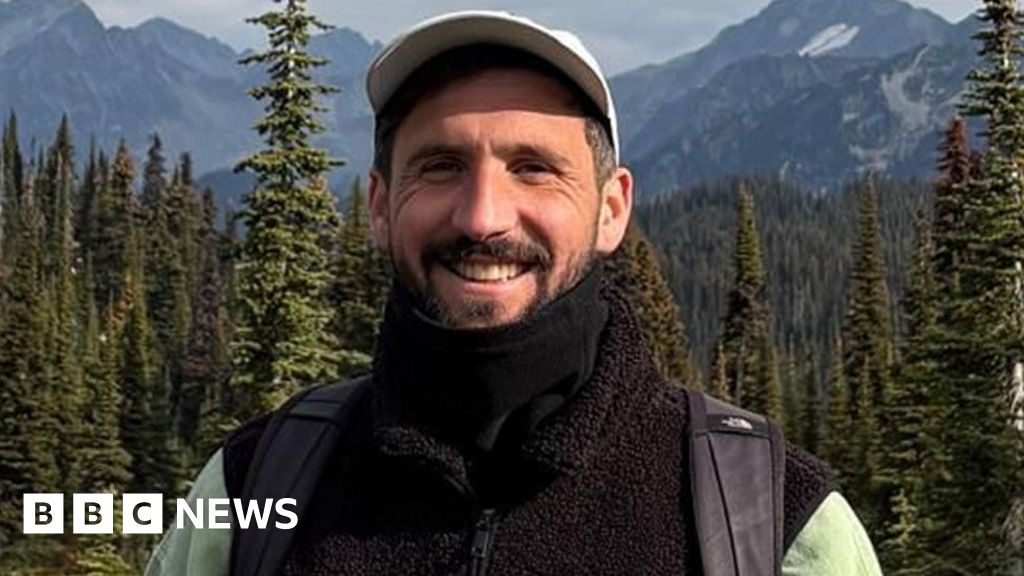
A man who ran round a sports track for 24 hours to raise awareness of men's mental health said "wanting to bring a change is something I'm passionate about".
Oliver Gooch, from Blackpool, ran around the town's Stanley Park, facing heavy winds, driving rain and freezing overnight conditions as Storm Claudia battered the coast last weekend.
The 35-year-old completed 95 miles (153km) - the equivalent of running from Blackpool to Manchester and back - and over 400 laps of the track.
Having lost a close friend who took his own life five years ago, he said: "I wanted to do it in memory of him."
It follows his 2023 feat, a near 250 mile (400km) pier to pier run from Blackpool to Brighton, which raised £2,500 for Movember.
"I'm just wanting to raise awareness and make a change," he told BBC Radio Lancashire.
"It was important for me to do it in Blackpool as it's my hometown," he said.
Blackpool also has the highest rate of deaths linked to alcohol, drug abuse and suicide in England, a recent study found.
The town is plagued by fatalities linked to alcohol, drug abuse and suicide.
A study of deaths recorded at coroners' courts across England, suggests that between 2019 and 2021, about 46,200 people lost their lives in this way - the equivalent of 42 people every day.
And research suggests Blackpool has the highest rate of these deaths with a rate of 83.8 for every 100,000 people.
Compare that to the area with the lowest rate, Barnet in Greater London, where the figure stands at 14.5 deaths per 100,000 people.
Oliver said the challenge "was tough to start off in that storm at 5pm on the Friday," but "the middle of the night was probably the hardest".
"Fortunately I had people come and support me the whole time, and just doing a couple of laps with me, so that really kept me going."
"I think there's still a stigma about men talking about mental health," he said, "but I think year or year there's improvements being made."
Listen to the best of BBC Radio Lancashire on BBC Sounds and follow BBC Lancashire on Facebook, X and Instagram and watch BBC North West Tonight on BBC iPlayer. You can also send story ideas via Whatsapp to 0808 100 2230.
Ross Powell has spoken about the challenges he faced to help others see that change is possible.
Probe into historical abuse at former units in Sussex could lead to more alleged victims coming forward.
In the UK, new schemes to support mental health are introducing to people an unexpected skill: stand-up comedy.
The Leave A Light On singer wants to reduce stigma around discussing mental health struggles.
The car is crewed by a team who can treat people at the scene rather than take them to hospital.
Copyright 2025 BBC. All rights reserved. The BBC is not responsible for the content of external sites. Read about our approach to external linking.
